1952
The first memorial
Students of Dhaka Medical College built a temporary monument on 23 February to honour the martyrs. Police demolished it within days, yet the idea of remembrance could not be erased.

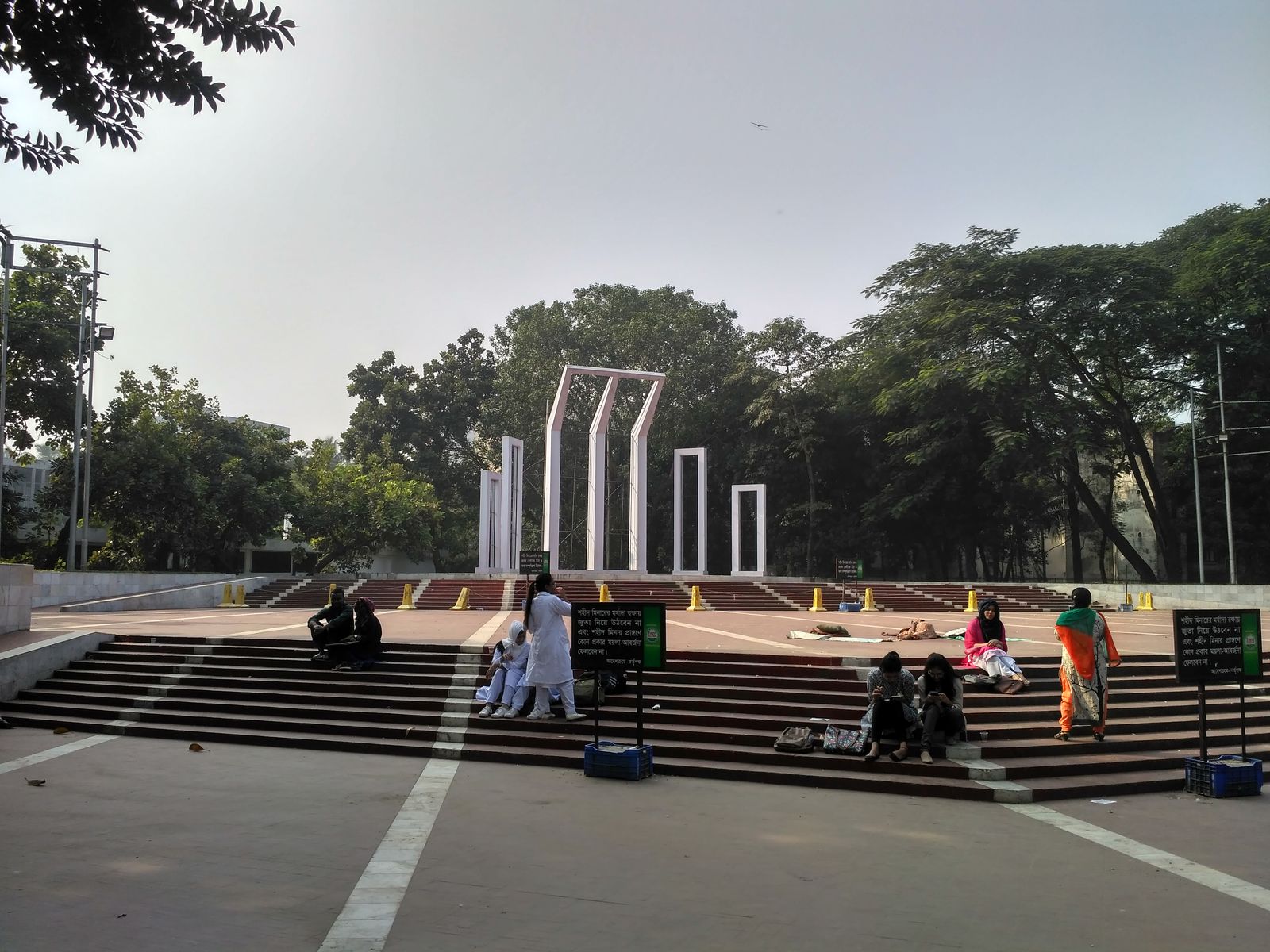
National memorial to the language martyrs of 1952
More than a structure: the visible symbol of the dignity of the Bengali language, of sacrifice and of cultural identity. It stands at the heart of the Dhaka Medical College and University of Dhaka area.
Type
Historical landmark
Location
University of Dhaka area
Plus code
P9GW+VJ, Dhaka
Suggested time
30–60 minutes
Why this place matters
On 21 and 22 February 1952, students and activists demanding official status for Bengali were shot by police near Dhaka Medical College. The Shaheed Minar was born out of that bloodshed.
Bangladesh Tourism Board →1952
Students of Dhaka Medical College built a temporary monument on 23 February to honour the martyrs. Police demolished it within days, yet the idea of remembrance could not be erased.
1957–1963
Work on the permanent monument began with a design by artist-architect Hamidur Rahman, with sculptor Novera Ahmed collaborating. Martial law interrupted it; a modified design was completed in 1963.
1971–1983
The monument was destroyed at the start of the Liberation War, rebuilt after independence and expanded to its present scale in 1983. It is now the central symbol of the Language Movement.
Worldwide legacy
At Bangladesh’s initiative, the UNESCO General Conference approved International Mother Language Day in 1999; 21 February has been observed worldwide since 2000.
See UNESCO’s page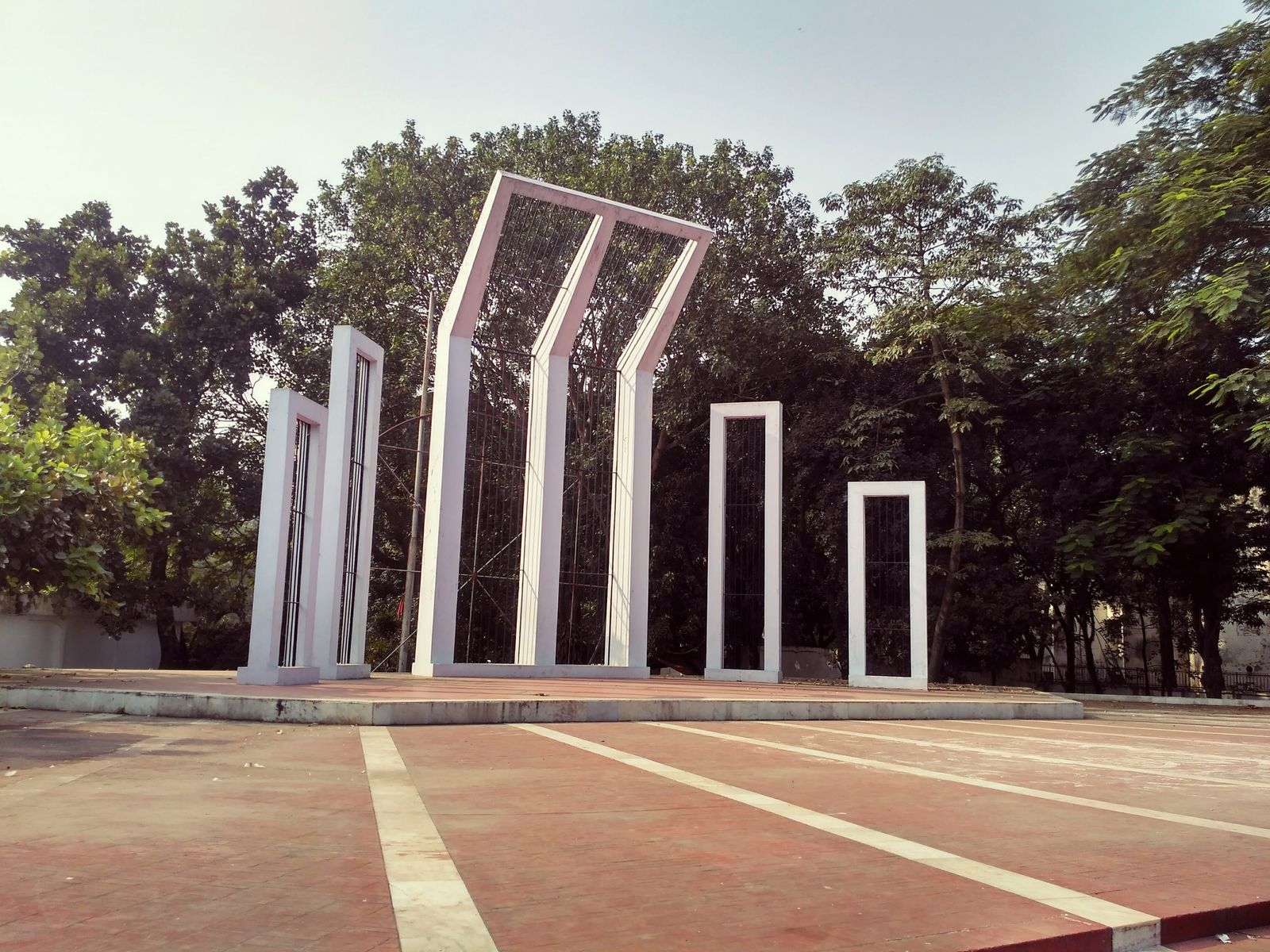
The language of the architecture
In a modernist vocabulary, the tall white frames are read as a family — a mother at the centre, her children beside her. The red sun disc behind them links blood, awakening and Bengali cultural symbolism.
Style
Modernist memorial architecture
Original design
Hamidur Rahman · Novera Ahmed
Planning your visit
Confirm current entry conditions and any charges before travelling. Flowers and transport may involve separate personal expenses.
Soft morning or late-afternoon light is most comfortable. Allow 30–60 minutes for a normal visit, and much longer on 21 February because of crowds and queues.
Do not plan around dedicated visitor parking at the monument. Using authorised parking or a drop-off in the university and medical college area and walking is more realistic.
Metro
Get off at Dhaka University station on MRT Line 6. From there walk through the university area or take a short rickshaw ride.
Rickshaw / CNG
From Shahbagh, TSC, Doel Chattar or the University of Dhaka area, simply saying “Central Shaheed Minar” is usually enough for drivers.
21 February
Roads and entry points may be regulated on the day. Follow the entry and exit routes and security instructions set by the police and authorities.
Note: opening arrangements and transport access can change because of special programmes, security instructions or maintenance. Check current conditions before you travel.
A simple walking order
First read the whole composition from the broad front steps. Then walk slowly towards the central column and the red disc to see the structure up close. When flowers or commemorations are taking place, keep the main axis clear and do not stand against the flow of visitors.
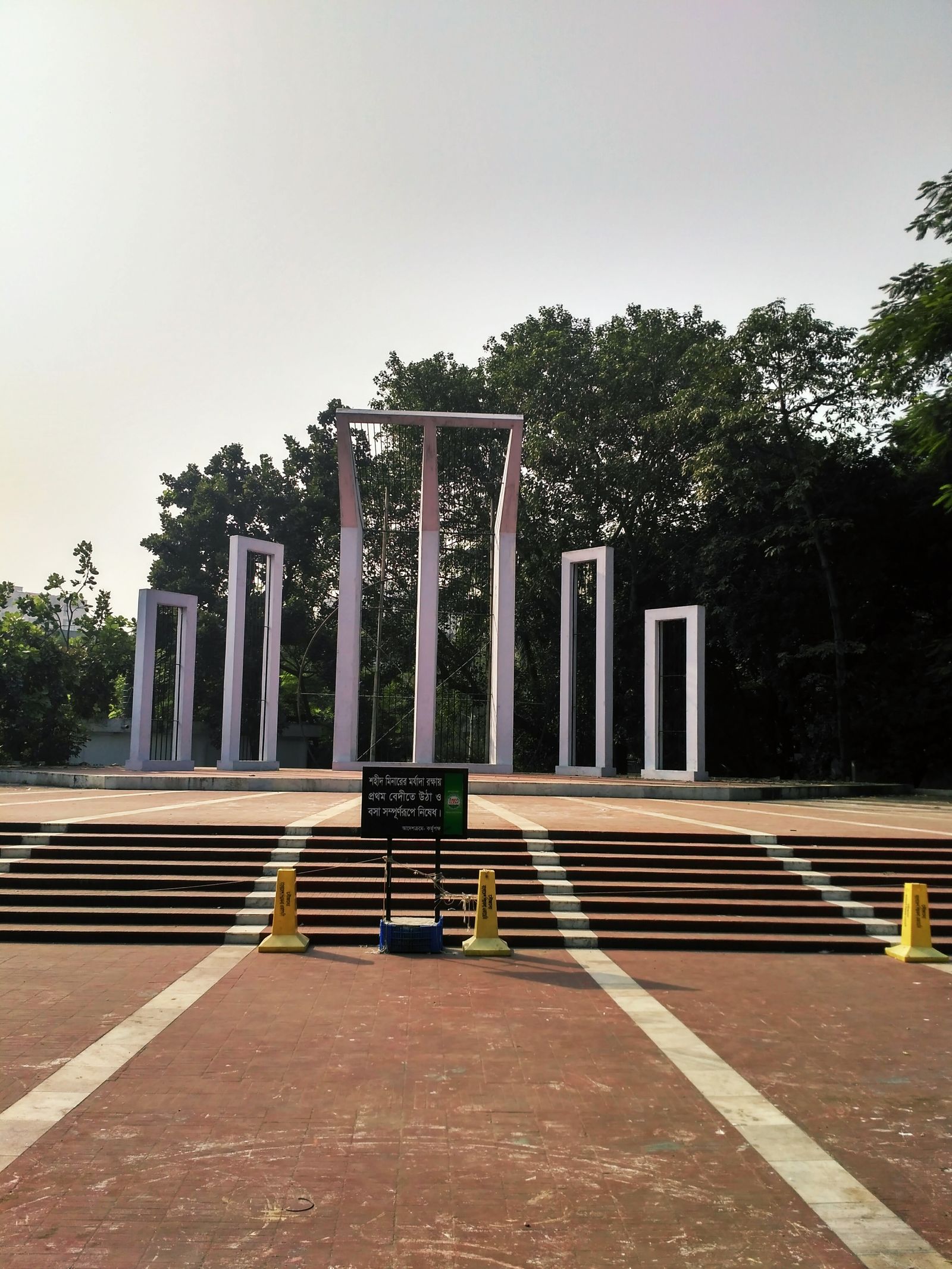
Photo spot 01
Frame from the bottom of the steps, keeping the symmetry of the vertical columns and the red disc behind them on one axis — this is where the symbolic power of the monument reads best.
Photo spot 02
Standing 30–45 degrees to the left or right reveals the layering, spacing and depth of the frames. Late-afternoon raking light makes the shadows more dramatic.
Photography etiquette
This is a place of remembrance, not an entertainment venue. Avoid dramatic poses in front of flower tributes, mourning ceremonies or private acts of respect, and ask consent before photographing people close up.
Nearby attractions
The historic red-brick building of the University of Dhaka; it pairs beautifully with the Shaheed Minar on a cultural walk.
The sculpture of Bangladesh’s national bird and a well-known crossing in the university area.
Important for historic mass gatherings, memories of the Liberation War and open green space.
In Shahbagh, it gives deeper context on Bangladesh’s history, art, archaeology and cultural heritage.
Food nearby
Consider looking for a meal stop around the medical college, university area or Shahbagh if it fits your route. This guide has not verified current venues, menus or opening hours. Check the actual address, menu, price, dietary needs and access before choosing.
Meal ideas to check
Tea · singara · paratha · rice
Other meal ideas
Biryani · kebab · Bengali meals
You could include a meal break when planning Shaheed Minar, Curzon Hall / Doel Chattar or Shahbagh. Check the route, access and an open venue separately; you do not need to combine every stop.
Where to stay
An area to compare if your plans include the university and museum. Check the exact accommodation address, current transport and walking conditions.
Compare this area with your other city destinations, checking exact accommodation addresses and current transport.
Another area to compare when searching for accommodation. Verify availability, transport cost and traffic; do not assume a short journey.
Hotel names, prices and room availability change quickly — check recent ratings, cancellation policies and the actual commute to the university area before booking.
Map and address
Address
Near Dhaka Medical College Gate, Secretariat Road, Secretariate Rd, Dhaka 1000
Coordinates
23.727238, 90.396625
Plus code
P9GW+VJ, Dhaka
Frequently asked questions
A University of Dhaka report labelled 2024 describes public access, but does not confirm current fees or entry conditions. Check current authority instructions before travelling.
The main Google Maps listing checked on 26 October 2026 supplied no hours. A nearby separate shrine listing is not evidence of this monument being open 24 hours. Confirm current visiting arrangements.
Dhaka University station on MRT Line 6 is one of the most convenient options. From there you can walk through the university area or take a short rickshaw ride to the Shaheed Minar.
About 20–30 minutes is enough to see the monument and pay respects. If you want to take in the history, the architecture and the surrounding university area slowly, allow 45–60 minutes.
Ekushey February brings huge crowds, flower tributes and special security arrangements. Follow the designated entry and exit routes and official instructions.
In soft morning or afternoon light the white columns, the red disc and the lines of the front steps read most clearly. Respect other visitors’ privacy while tributes are being paid.
It is the national symbol of those martyred in the 1952 Language Movement. The demand for the dignity of the mother tongue and cultural identity shaped Bangladesh’s national consciousness.
Dhaka University station on MRT Line 6 is the most practical for most visitors; from the station it is a short walk through the university area to the monument.
In-depth guides
The 1952 Language Movement, the timeline of the monument and International Mother Language Day.
Read more →Metro, rickshaw, opening hours, entry fee, how long to stay and etiquette.
Read more →Curzon Hall, Doel Chattar, Suhrawardy Udyan, the National Museum, food and where to stay.
Read more →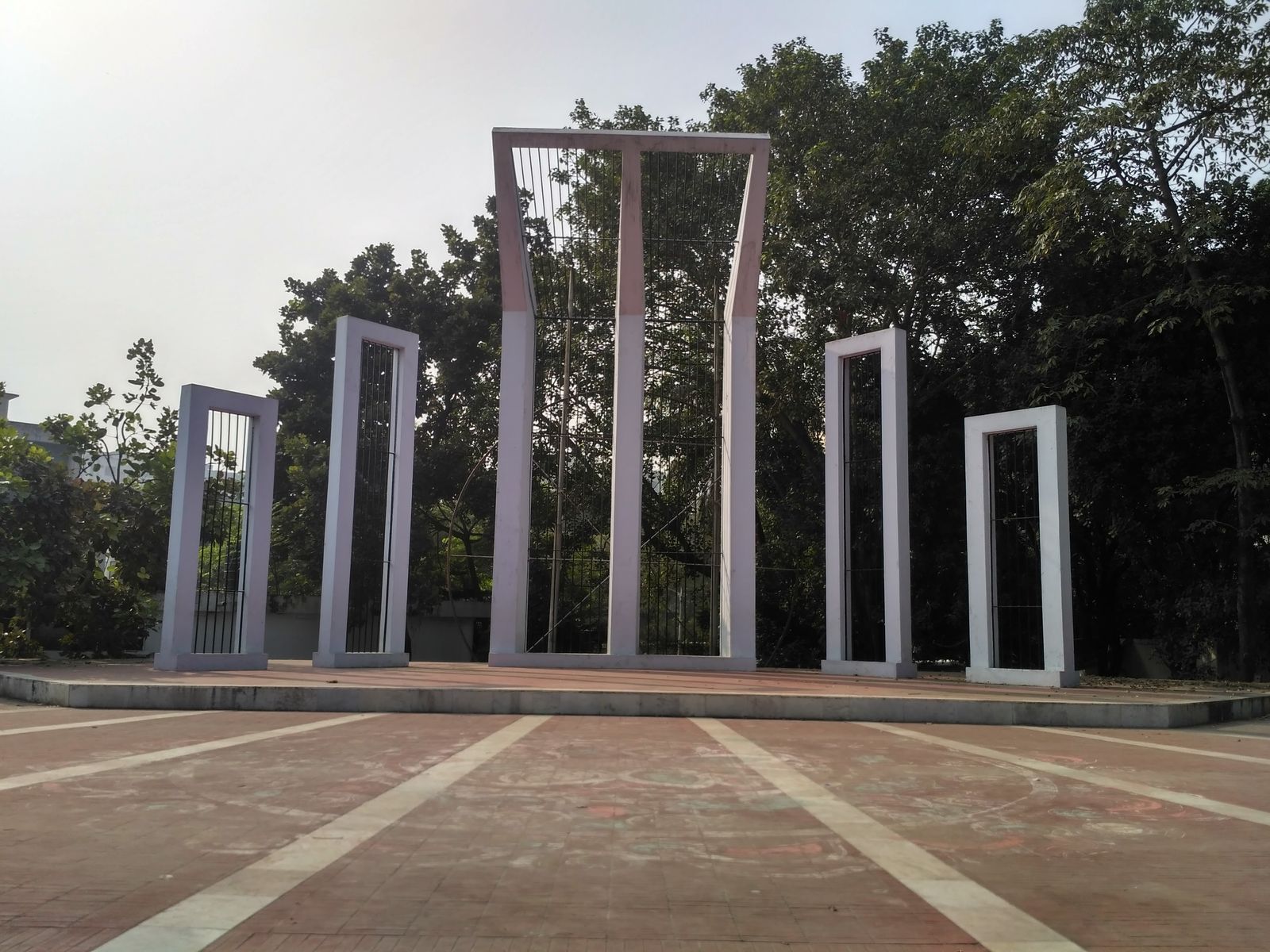
Trusted sources