
Central Shaheed Minar

History of the Central Shaheed Minar

The Central Shaheed Minar is not an ordinary landmark. It is the national symbol built in memory of those who gave their lives demanding dignity for their mother tongue. The timeline below follows that memory from 1952 to today.

Checked 26 October 2026. Confirm current access, charges, travel routes and separate opening arrangements for nearby places. Sources differ on the demolition of the first memorial: the Tourism Board gives 24 February, Banglapedia 26 February 1952.

1952: where it began

On 21 and 22 February 1952, police fired on students and activists demanding that Bengali be made a state language. The shootings happened close to Dhaka Medical College, and the idea of the Shaheed Minar was born from that bloodshed.

The demand was cultural as much as political: Bengali speakers were defending their identity against the language policy of the then Pakistan state.
The first monument and its demolition

On 23 February, students of Dhaka Medical College built a temporary monument overnight. Police demolished it within a few days; sources differ slightly on the exact date of the demolition.

The idea of remembrance, however, could not be erased — the demand to rebuild a monument became a national movement.

1957–1963: the permanent monument

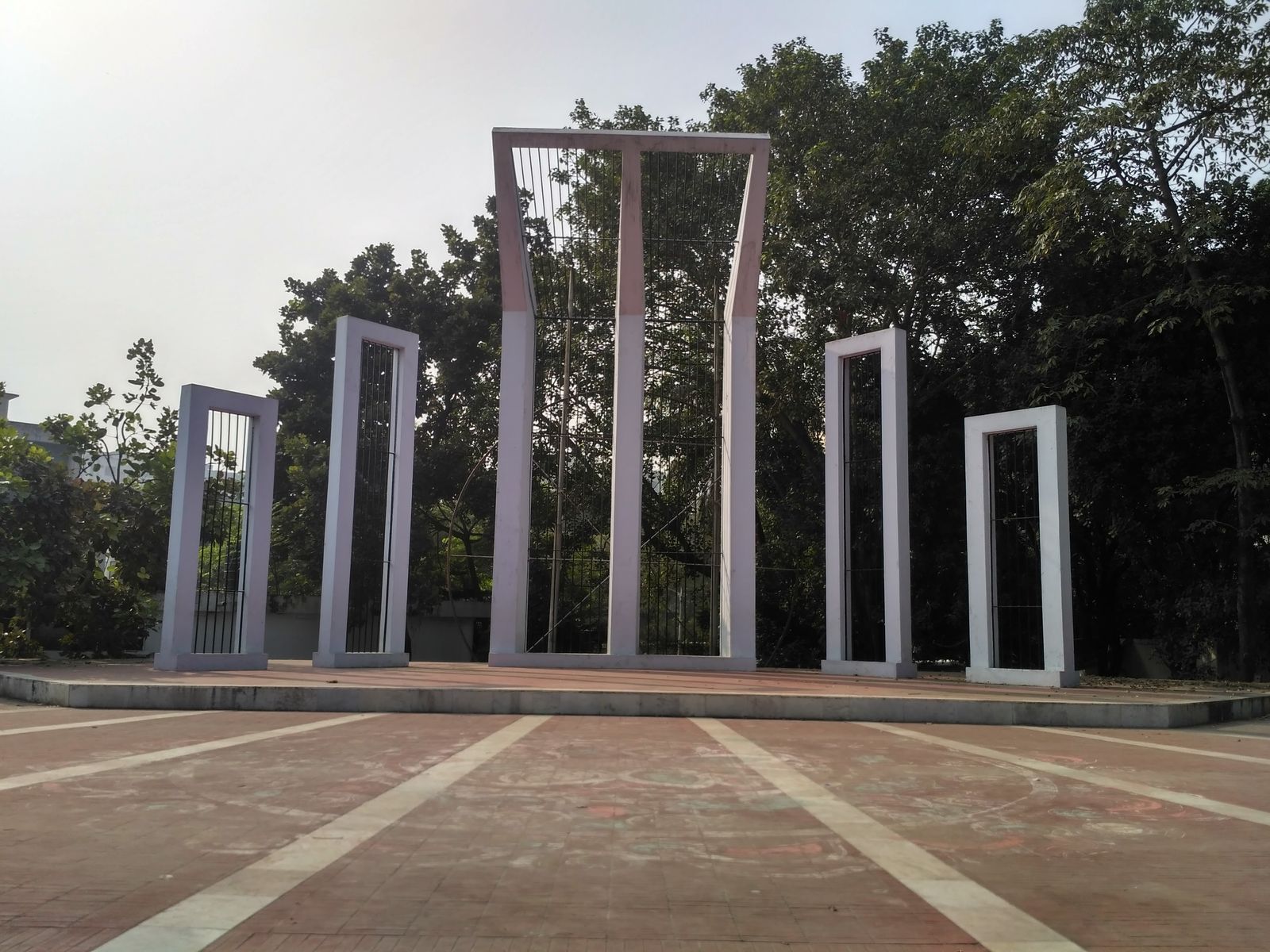
Work on the permanent monument began with a design by the artist-architect Hamidur Rahman, with sculptor Novera Ahmed collaborating. Martial law halted the work, and a modified design was completed in 1963.

The tall white frames and the red sun disc behind them became the architectural language of Bengali cultural symbolism.

  • Design: Hamidur Rahman (artist-architect)
  • Sculptural collaboration: Novera Ahmed
  • Construction: started 1957 · completed 1963

1971 and after: destruction, rebuilding, expansion

The monument was destroyed at the start of the Liberation War in 1971. It was rebuilt after independence and expanded to its present scale in 1983.

Today the structure is the central symbol of the Language Movement and the country’s national consciousness — and every year it is the focal point of the largest tribute on Ekushey February.

International Mother Language Day

At Bangladesh’s initiative, the UNESCO General Conference approved 21 February as International Mother Language Day in 1999; it has been observed worldwide since 2000.

Tributes of flowers at the monument begin the night before, and state and public ceremonies are held in the morning.

Good to know before you go

When was the Central Shaheed Minar built?+

Work on the permanent monument began in 1957 and was completed in 1963; after being destroyed in 1971 it was rebuilt and expanded to its present scale in 1983.

Who designed the monument?+

The main design was by the artist-architect Hamidur Rahman, with sculptor Novera Ahmed collaborating.

How is it connected to the Language Movement?+

It was built in memory of those martyred on 21–22 February 1952, when protesters demanding state-language status for Bengali were shot.

Why is International Mother Language Day on 21 February?+

At Bangladesh’s initiative UNESCO approved the date in 1999 in memory of the Language Movement, and it has been observed worldwide since 2000.